VLTAT stands for Veteran Led Therapeutic Adventure Trips. If you searched for wilderness therapy for veterans and landed here, that A is the whole reason this program works the way it does. Adventure, not treatment plan, not clinical protocol, not a program built around a diagnosis. Every trip starts in Great Falls, Montana, before the real work happens further out in terrain we keep vague on purpose.
Here's the honest version of what we do, what we don't, and where it actually fits.
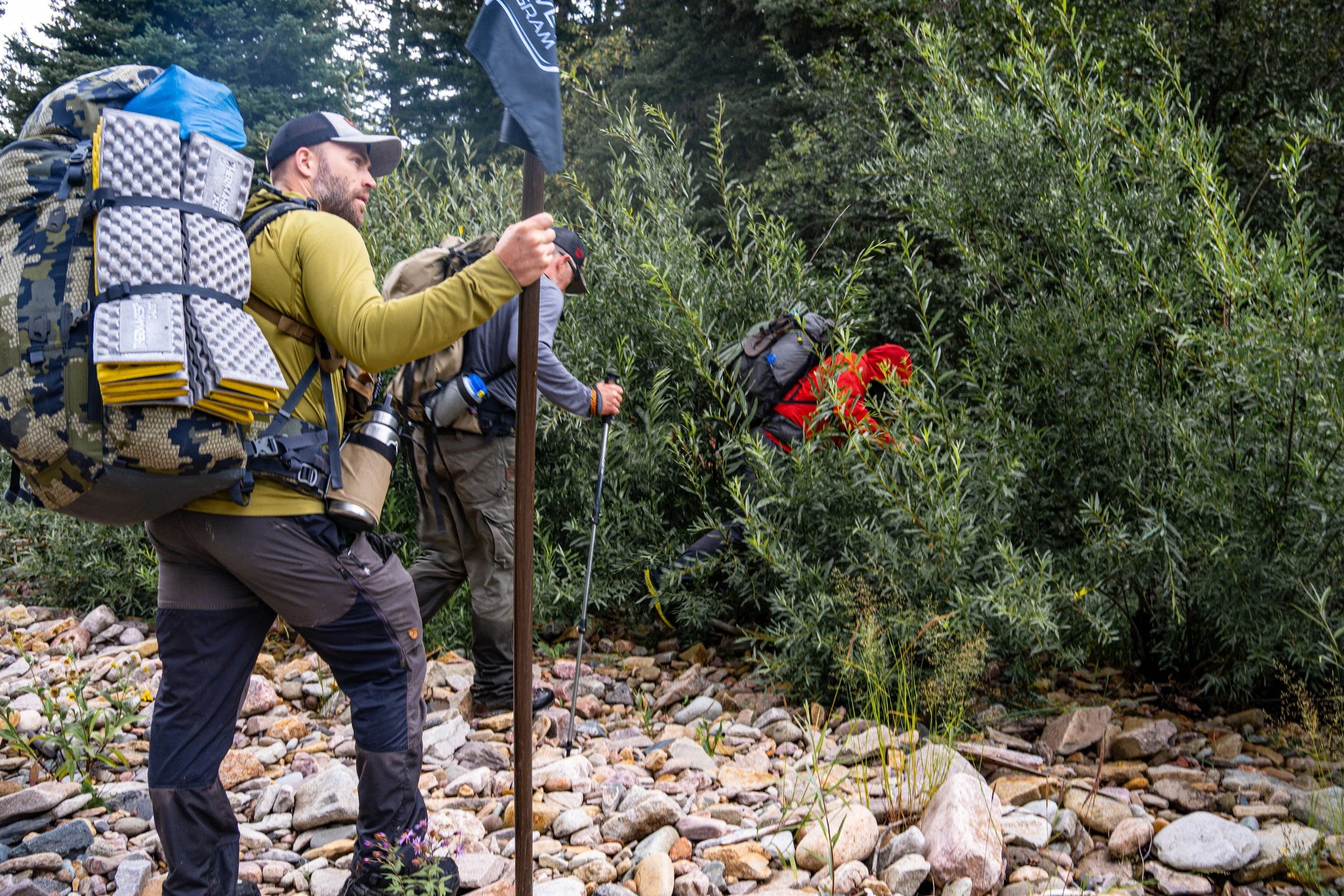
Carson Davis - Team Leader & Medic guiding some veterans through a tough spot on the trail
Is This the Same as "Wilderness Therapy"?
Not the wilderness therapy you've probably heard about. Search that phrase and most of what comes up is residential treatment for teenagers, programs built around isolation and correction, often for kids who didn't choose to be there. That's a real, separate industry, and it has nothing to do with what we run.
A VLTAT is voluntary. Every veteran who comes on a trip chose to be there. Nobody is isolated from anything; they're immersed in it, on purpose, alongside other veterans who get exactly what they're carrying. If you're searching for wilderness therapy for veterans specifically, built by veterans for veterans, that's what a VLTAT actually is.
What Adventure Therapy Actually Is
Adventure therapy is built on a simple idea backed by real research: put people through physical challenge, real consequences, and unpredictable conditions, alongside others going through the same thing, and something happens that a conversation in an office can't replicate. Researchers have made the case directly for veterans specifically, arguing that therapeutic adventure gives veterans with real mental health struggles a path that traditional clinical settings often can't offer on their own. Journalists have documented the same pattern from the ground: veterans with PTSD increasingly turning to outdoor recreation and finding real improvement, nature based approaches gaining serious traction in how the broader veteran mental health community thinks about treatment.
This is not the same thing as the wilderness camps built around troubled teenagers. That's a different model, a different population, and a different set of problems entirely. Adventure therapy for veterans is peer driven, voluntary, and built around capability, not correction.
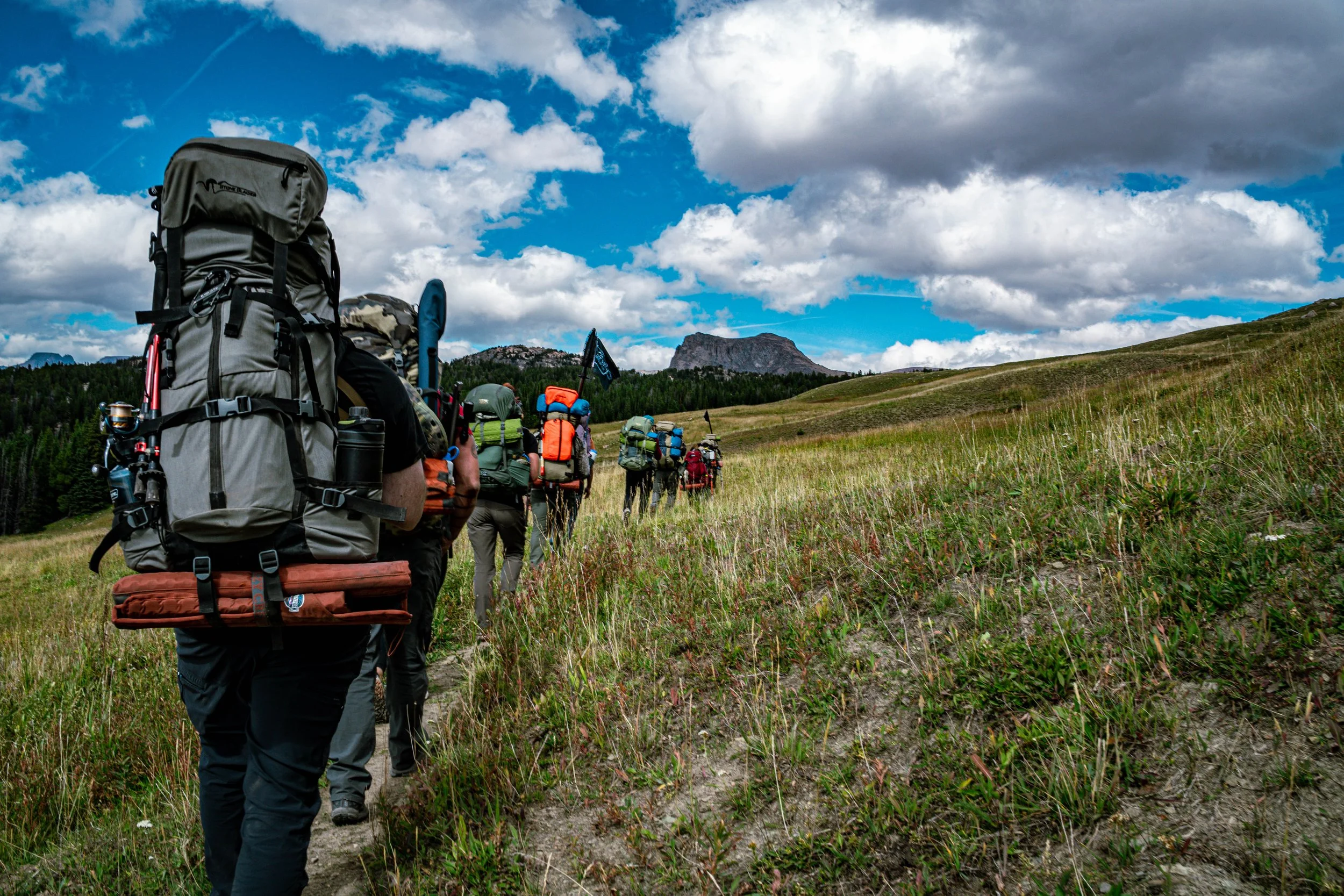
Hiking to the next campsite on VLTAT 26-4
Montana Is Our Therapist
Here's the honest version of how we think about this. Nobody on a VLTAT is running a clinical session. There's no licensed therapist sitting a veteran down and working through a treatment plan. What's actually doing the work is Montana itself: the physical demand of the terrain, the weather that doesn't care what your day was supposed to look like, the cold water, the miles, the labor, all of it happening alongside other veterans going through the exact same thing at the exact same time.
We say it plainly: Montana is our therapist. Not a person in an office. A place that asks something real of you and doesn't let you fake your way through it.
Why We Don't Call This Clinical Therapy
We're not going to overstate what this is. Nobody running a VLTAT is a licensed clinician delivering treatment on these trips, and we're not going to imply otherwise. That said, real expertise sits behind how this program was built. Kaitlyn Stevenson, our Administrative Specialist, holds degrees in Social Psychology and Criminal Justice and is finishing her MSW with a focus on veteran mental health and addiction. Luke Urick, our Executive Director, holds a BA in Psychology and an MS in Organizational Management. Bryon Gustafson, our Deputy Director, spent ten years doing hands on family counseling before any of this existed. None of that makes a VLTAT a clinical program. What it means is the people who built it know the difference between what actually helps and what just sounds like it should, and built accordingly. Meet the rest of the team on the squad page.
Every team leader who actually runs a trip is PsychArmor Veteran Ready certified, trained specifically to work with veterans. That's not a clinical license either. It's real, verified training in how to do this work right, not a credential we're implying is something it isn't. You can see the certification itself here.
The trips themselves are led by veterans, for veterans, built on peer support and shared experience, not clinical sessions. That's a deliberate choice, not a limitation. Some of the most honest conversations a veteran will ever have happen next to someone who's actually been where they've been, not across a desk from someone who's only read about it.
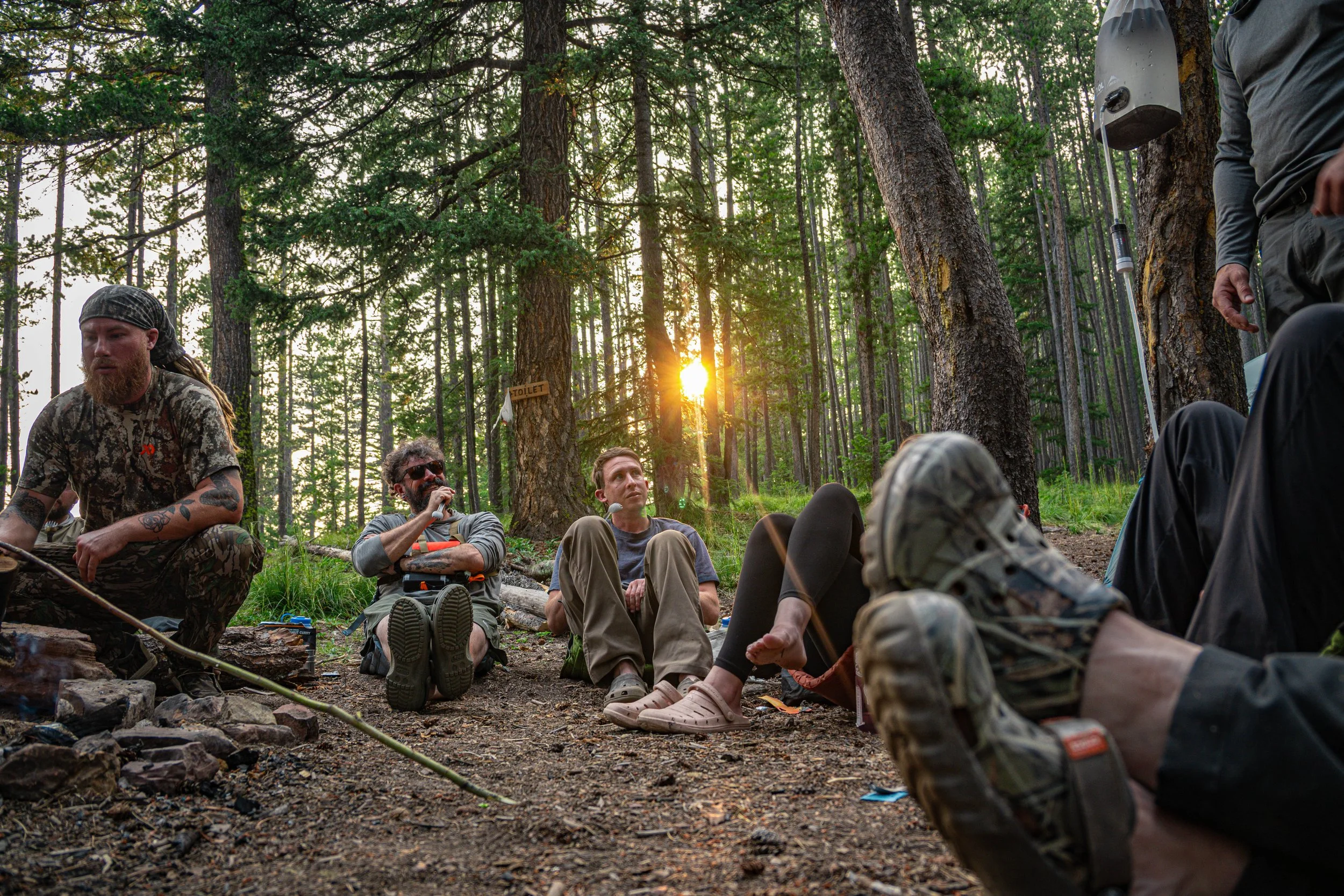
Night one of VLTAT 26-3 around the campfire
The Four Things That Actually Do the Work
Physical challenge. Your body doing something hard, on purpose, with no way to fake it. Peer camaraderie. Going through that challenge next to other veterans, not alone, not performing for anyone. Nature immersion. Being somewhere that doesn't care about your rank, your job, or your bad week, somewhere that's just Montana, indifferent and enormous. And veteran led instruction, guidance from people who've actually lived the thing they're leading you through, not someone certified to talk about it.
Strip any one of these out and you've got a different, weaker version of what we're doing. All four together is the actual model.
Why This Isn't a Retreat
We're not selling relaxation. Nobody's coming back from a VLTAT talking about how restful it was. It's physically demanding, it asks real things of you, and it's built that way on purpose. Comfort isn't the goal. Getting somewhere real is. If you're looking for a spa weekend with a mountain view, this isn't it. If you're looking for something that actually moves the needle, that's the entire point of building it this way.
Montana Doesn't Care Who You Were
That's the last piece of why this works, and it's the simplest one. Out here, nobody's tracking your rank, your job title, or whatever version of yourself you left behind when you got out. The river doesn't know your resume. The mountain doesn't care what your worst day looked like. You're just a person, doing something hard, next to other people doing the same thing. That's wilderness therapy for veterans, built as adventure. That's the A in VLTAT. And that's why we mean it when we say Montana is our therapist.