Every gear issue, somebody asks the same question. What boots do I buy? There's no single right answer, but there's real data behind this one. Years of participants and team leaders showing up to VLTAT trips in whatever boots they own, hiking in them for four days straight, and either holding up or falling apart. That's not a lab test. That's the actual field.
WHAT WE'RE ACTUALLY GOING OFF OF
This isn't a gear review site pulling boots out of a box for a week and writing up first impressions. This is what we've watched happen to real feet, on real trail, trip after trip, for years. Some boots we've seen hold up again and again. Some we've watched cause the same problem every single time. That's the authority behind this, nothing more and nothing less. Where it's useful, we're also pointing you to outside reviews on each boot so you can see how our field experience lines up against independent testing, and where it doesn't. Down at the bottom, we'll give you one specific model per brand that we'd actually point you to buy.
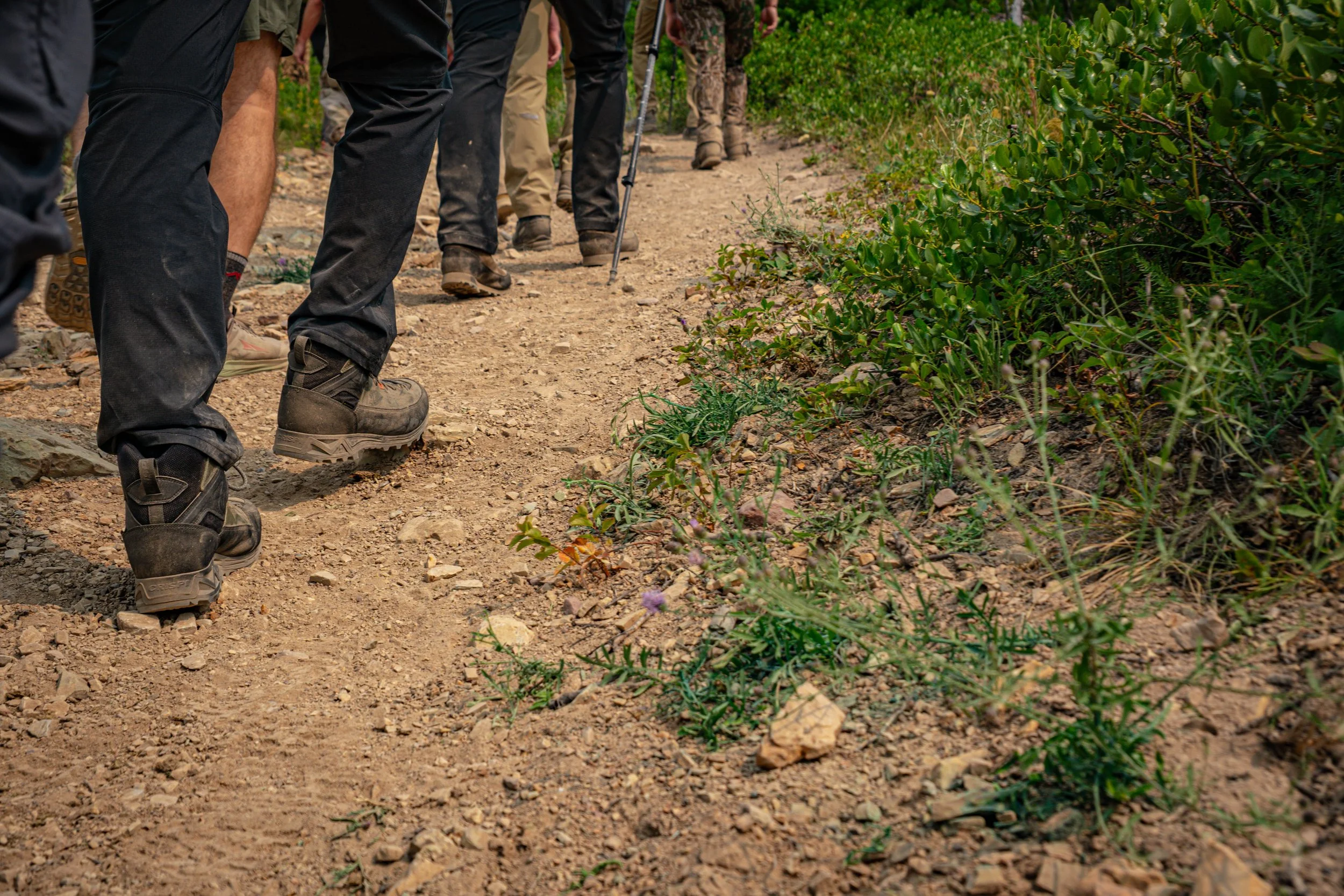
These boots are made for walkin’
Footwear and camp shoes both matter here, and we'll get to camp shoes before we're done.
THE BOOTS THAT NEED REAL BREAK IN TIME
Kenetrek shows up on the feet of the guys who've been doing this a while, and there's a reason. They last. Good ankle support, built to take years of abuse and keep going. The tradeoff is real: these boots need genuine break in time, not a weekend's worth, and they're slow to dry. Cross a creek or get caught in weather and you're living in wet boots longer than you would in almost anything else on this list.
Lowa and Danner land in the same category. Both are solid value for what you pay, and both need a real break in period before you trust them on back to back long days. Both dry slower than some of the other options here. Blister risk on these two comes down to your foot specifically. We've watched it go either way, clean trips and bad ones, depending on the person wearing them.
One thing worth flagging plainly: Switchback Travel's own review of the Renegade found it comfortable straight out of the box, with little break in needed, and raised a separate concern about the toe seam holding up over time, something we haven't personally run into. That's not what we've watched happen on our own trips, where the break in period has mattered every single time we've sent someone out in a fresh pair. Read both data points for what they are. It's part of why our actual pick for Lowa, down in the quick picks section, isn't the Renegade at all.
THE BOOT MOST PARTICIPANTS ALREADY OWN
Oboz is probably the single most common boot showing up at gear issue, and the price point is exactly why. If you already own a pair, that's one less thing to buy. The tradeoff is support. We've seen more blisters come out of Oboz than out of the boots above, consistently enough that it's worth saying plainly instead of pretending every boot performs the same. If you're already broken in and your feet know these boots, you're probably fine. If you're buying them fresh for the trip, budget extra time to break them in before you show up.
Worth saying here too: The Big Outside's review of the Bridger rates its support as excellent, even on steep, off trail terrain under a loaded pack. That hasn't matched what we've consistently seen with a four day trip and a 40 pound minimum pack weight on our own routes. Different scale of abuse over different terrain can produce a different result, and we'd rather tell you both sides than pretend ours is the only one that exists.
THE QUICK DRYING OPTION TEAM LEADERS LEAN ON
The low ankle Salomon X Ultra models are the second most common boot on our trips, right behind Oboz, and a lot of our own team leaders choose them for one reason above the rest: they dry fast. On a multi day trip where your feet are going to get wet whether you plan for it or not, a boot that dries out overnight instead of staying damp for two more days is worth more than people expect going in. Independent testing backs this up directly, with reviewers reporting the X Ultra dry by morning after an overnight hang.
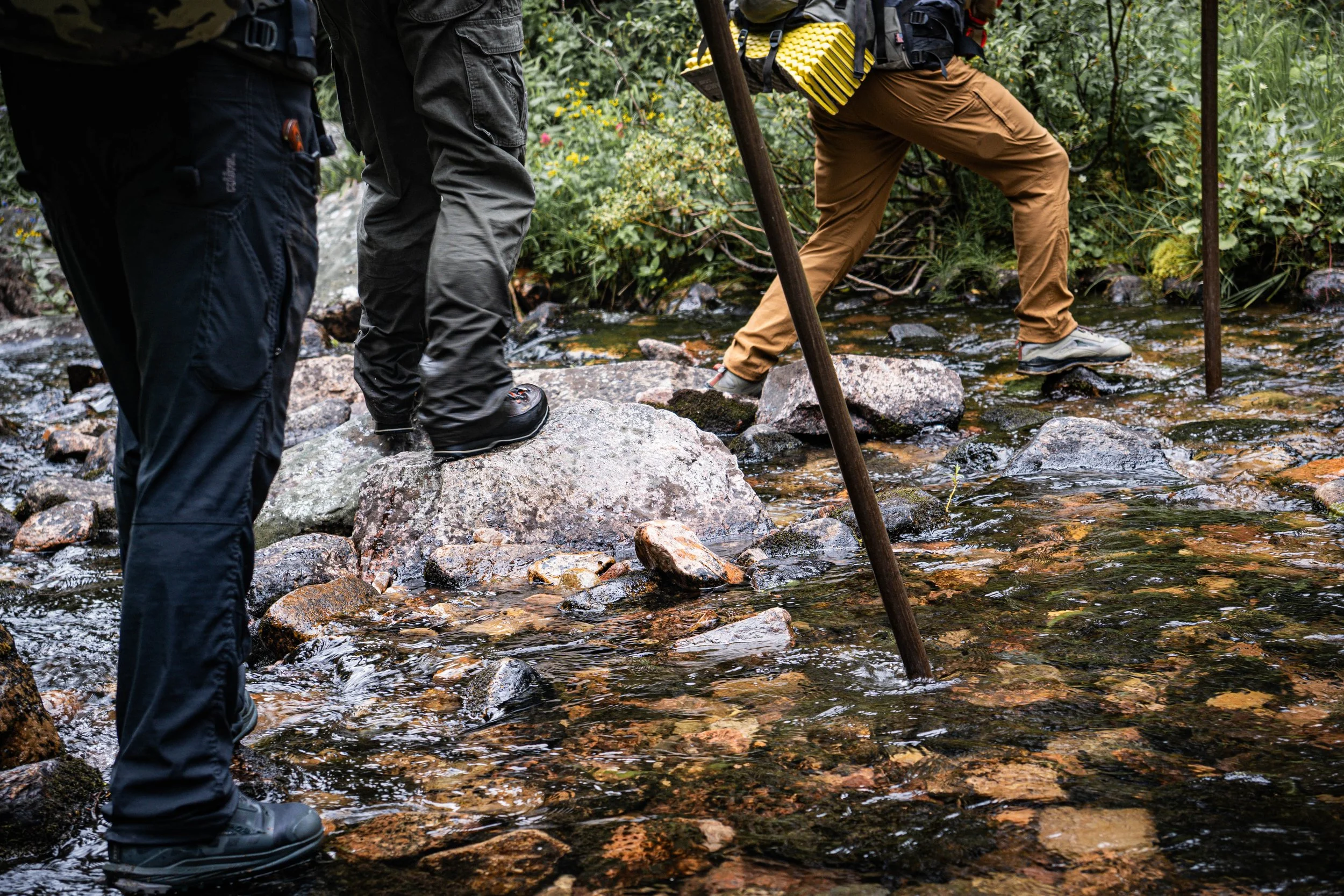
creek crossings
almost every trail has a creek crossing. be prepared.
WHAT ABOUT ASOLO
Here's where we're not going to make something up. We don't have enough of our own participants in Asolo Fugitive GTX boots yet to tell you what we've actually seen on trail, and we're not going to dress up a guess as field knowledge. OutdoorGearLab's independent review rates the Fugitive as genuinely durable with strong waterproofing, but notes the tall collar is more flexible than supportive, a real weakness if you're carrying a heavy pack. That weakness is exactly why the Fugitive isn't our quick pick for this brand either, see below for the Asolo model we'd actually send you toward. What we can tell you beyond that is the principle that applies no matter which brand you're looking at, Asolo included, and it matters more than the brand name on the side of the boot.
WHY BREAK IN TIME ISN'T OPTIONAL
This isn't just something we've noticed anecdotally. A 2024 review in the Journal of Athletic Training, written by podiatrists looking specifically at blister prevention, backs up exactly what we've watched happen on trail for years. One military study they cite found that cadets who wore their boots more than 20 hours a week in the two weeks before training had a blister rate of about 30 percent, against roughly 44 percent for cadets who didn't break their boots in first. Troops deployed to Iraq who skipped breaking in their boots were more likely to get blisters over the course of the deployment than troops who didn't skip it.
The reason is physical, not superstition. Skin exposed to repeated pressure and friction actually changes structure, building thicker, more resistant layers that can take the stress of a long day on trail. That adaptation takes about a week of gradual exposure to show up. Buy your boots the week before your trip and your feet never get the chance to adapt. That's true no matter which brand or model you end up in.
WHAT TO ACTUALLY DO BEFORE YOU SHOW UP
Getting your boots ready for a hike comes down to time, not money. Buy your boots weeks out, not days out. Wear them around the house, on errands, on short walks, anywhere you'd normally just throw on sneakers. The goal is hours on your feet, not miles on a trail. If you can get a weighted pack on your back for even a short walk before you arrive, do it. Our wellness coordinator may already have you doing a weighted walk test as part of screening, and showing up with boots that already know your feet makes that easier on you, not harder.
Camp shoes matter too, and they're the part people forget. Bring something lightweight you can slide into at camp once your boots come off for the night. Your feet need the break, and trying to survive four days in nothing but the boots you hiked in all day is a mistake we've watched people make more than once.
QUESTIONS PEOPLE ACTUALLY ASK ABOUT THIS
Do my boots need to be waterproof? Not strictly, but on a float or a wet hike it helps more than it hurts, and most of the boots we've mentioned here come in a waterproof version.
Can I just bring the boots I already hike in regularly? Yes, and that's usually your best option. A boot that's already broken in and already knows your feet beats anything brand new, no matter what brand is stamped on it.
What if I can't get boots broken in before my trip date? Tell your team leader ahead of time. They'd rather know in advance and plan around it than find out on day one when it's already too late to do much about it.
What about buying boots locally before the trip? Scheels in Great Falls, one of our longtime local partners, is a solid option if you're coming through town and need to buy or get properly fitted before gear issue.
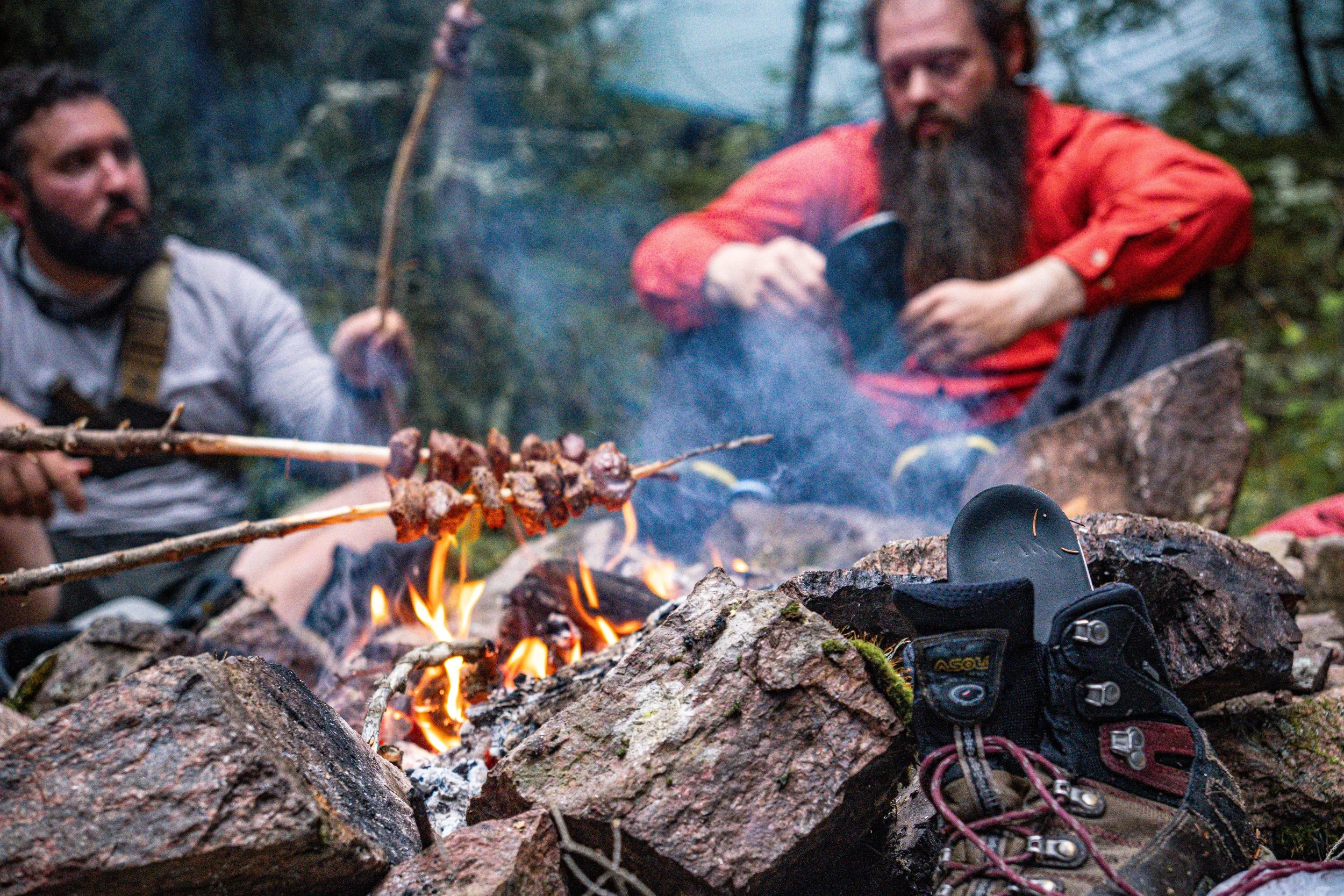
dry them out, but don’t burn them
QUICK PICKS: ONE MODEL PER BRAND
If you want the short version, here's the one model per brand we'd actually point you to buy, picked for a 40 pound minimum pack and four days on trail, not for a casual day hike. Every pick below is backed by an independent review, linked so you can read the full thing yourself.
Kenetrek: Mountain Extreme, Non-Insulated. Already proven on our own trips. Full grain leather, real ankle support, built to outlast everything else on this list. Verified review: Outside Bozeman.
Oboz: Bridger Mid, B-Dry. The most supportive option in the Oboz lineup and the one most participants already own. Verified review: The Big Outside.
Salomon: X Ultra 5 GTX. Dries faster than anything else here, which is exactly why our own team leaders already wear it. Verified review: Treeline Review.
Lowa: Tibet GTX Hi. Taller and more rugged than the Renegade, built as an actual backpacking boot for a loaded pack. Verified review: Outside Bozeman.
Danner: Mountain 600. Leather built to last years, confirmed durable, no better fit in the Danner lineup for this kind of trip. Verified review: The Inertia.
Asolo: TPS 520 GV. A stiff, resoleable, genuinely supportive leather boot, built for the heavy pack use the Fugitive isn't. Verified review: SectionHiker.
Two honest caveats on these picks. The Lowa Tibet review we found doesn't specifically test it under a loaded pack, so that part is our judgment call based on the boot's build, not a confirmed field test from the reviewer. And the SectionHiker review of the Asolo TPS 520 is older, from 2008, though the boot's basic construction hasn't changed since.
BRING BOOTS THAT HAVE ALREADY EARNED THEIR KEEP
None of this is complicated, and none of it requires buying the most expensive boot on the shelf. It requires buying early enough and wearing them enough that your feet and your boots have already come to an understanding before you ever hit the trail. That's the whole secret, and it's the same one that applies to everything else we do out here. The work you put in before the hard part starts is what makes the hard part survivable. Show up to your VLTAT in boots that have already earned their keep, and let the trip be about everything else you came for.