Every VLTAT morning starts around the fire, coffee in hand, trading stories about how the night went. Who heard field mice or bugs working their way around camp. Who had to get up at two in the morning and pee in the dark. Who laid there for an hour before finally falling asleep, and who was out cold in five minutes flat. That's how the day actually opens, nothing structured, just people waking up together over coffee.
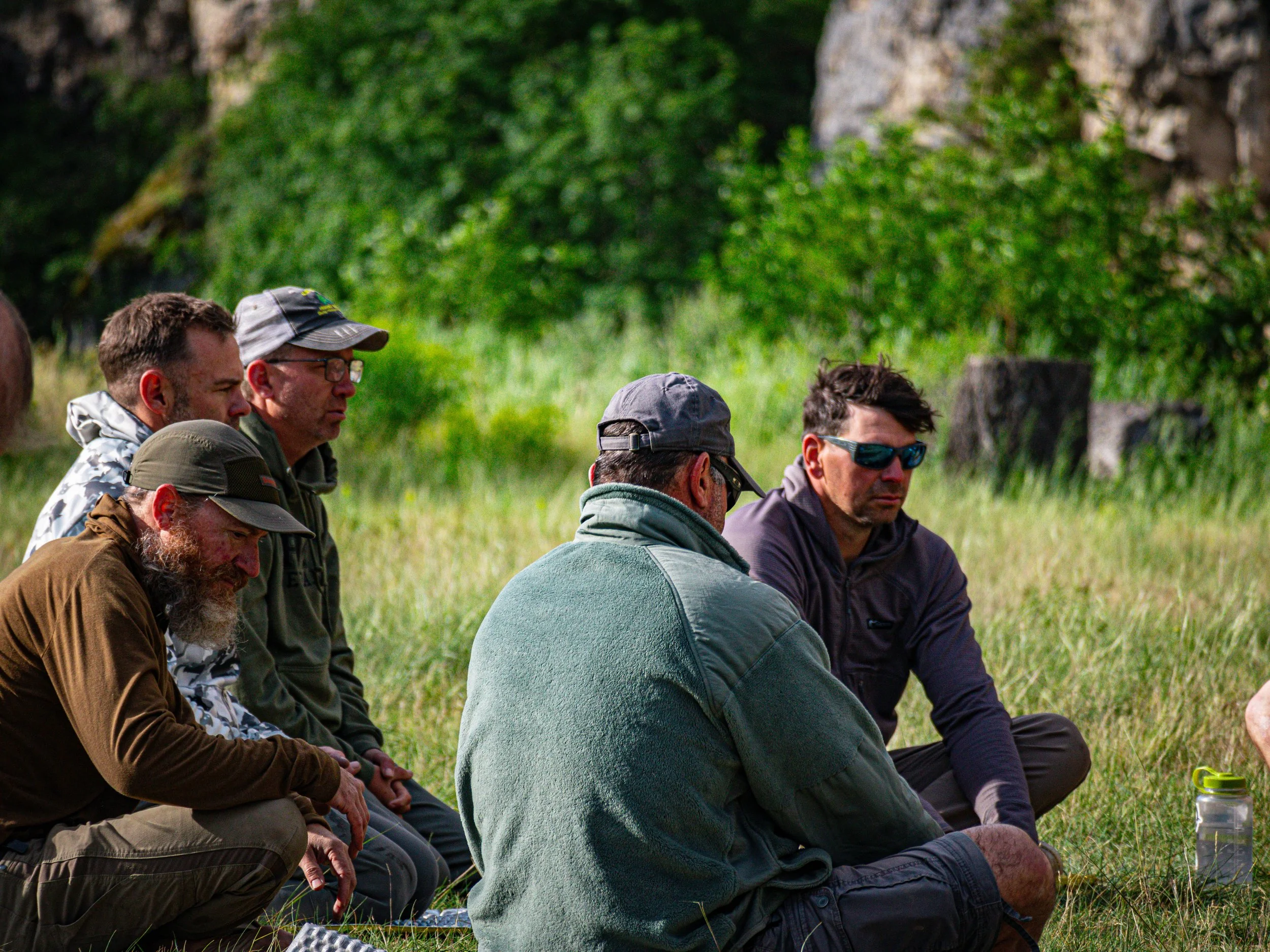
veterans on the smith river preparing for breath-work
Then it moves into something most people have never tried on purpose: breathing hard enough to feel it, then not breathing at all for as long as we can stand it.
This isn't a gimmick and it isn't therapy speak. It's a real technique, and here's exactly how we run it.
WE'RE NOT CERTIFIED, NOT YET
Before we go further, let's be straight about something. What we teach is Wim Hof style breathing, the same technique, run the same way. We are not certified Wim Hof Method instructors. Getting our team leaders certified is something we're actively working toward, not something we've already done. Until that happens, we're not going to call this "the Wim Hof Method" like we've got a certificate on the wall, because we don't. We're going to call it what it is: a breathing technique that works, taught by people who've done it themselves hundreds of times.
WHY BREATHING COMES FIRST
Most people go through their entire life breathing through their mouth without ever thinking about it. It's the easier habit, and it's also the worse one. Nasal breathing filters the air before it hits your lungs, slows your breathing rate down, and works with your body instead of against it. Mouth breathing does the opposite, it's shallow, it's fast, and it keeps your nervous system a notch more wound up than it needs to be. We spend real time on this before anyone starts the actual breathing rounds, because understanding why you're doing something matters as much as doing it.
THE TECHNIQUE, START TO FINISH
We start with a Lion's Breath. This is one extreme exhale, forcing every bit of stale air out of your lungs in one hard push. It's loud. There's coughing. Nobody looks graceful doing it, and that's fine, that's not the point.
From there we move into the actual rounds. Thirty breaths, in and out, at a pace faster than normal but controlled. On the last exhale of those thirty, you stop. No air in your lungs, none, and you hold there. This is the part that gets people. Somewhere in that hold you're going to feel what we call the fear nerve, a real, physical signal in your gut telling you something's wrong even though nothing is. The work is staying in that hold anyway, past the point where your body starts asking you to stop, and finding out you can. When you genuinely can't hold it any longer, you take one full breath in and hold that for fifteen seconds.
Then you do it again. Thirty breaths, hold on the empty exhale, inhale and hold for fifteen. Three full rounds total. The Lion's Breath only happens once, at the very start, it's not part of the repeating pattern.
After the third round, the group goes quiet. Controlled breathing, no talking, until everyone's finished. There's something about a group of veterans sitting in silence together after doing something physically hard on purpose that does more than any of us could explain in a paragraph.
WHAT THE RESEARCH ACTUALLY SAYS
This isn't just a feeling we're chasing. Controlled breathing and voluntary breath holds have real research behind them at this point. Studies on cold and breathwork protocols have shown measurable effects on inflammatory response, mood, and stress resilience, the kind of nervous system training that shows up in how someone handles pressure long after the exercise itself is over. We're not going to overstate what breathing alone can do. It's one piece of a larger morning, coffee and conversation before it, yoga before it, meditation and eventually cold water immersion after it. But the breathing is where the real work starts.
THE FIRST TIME I DID THIS
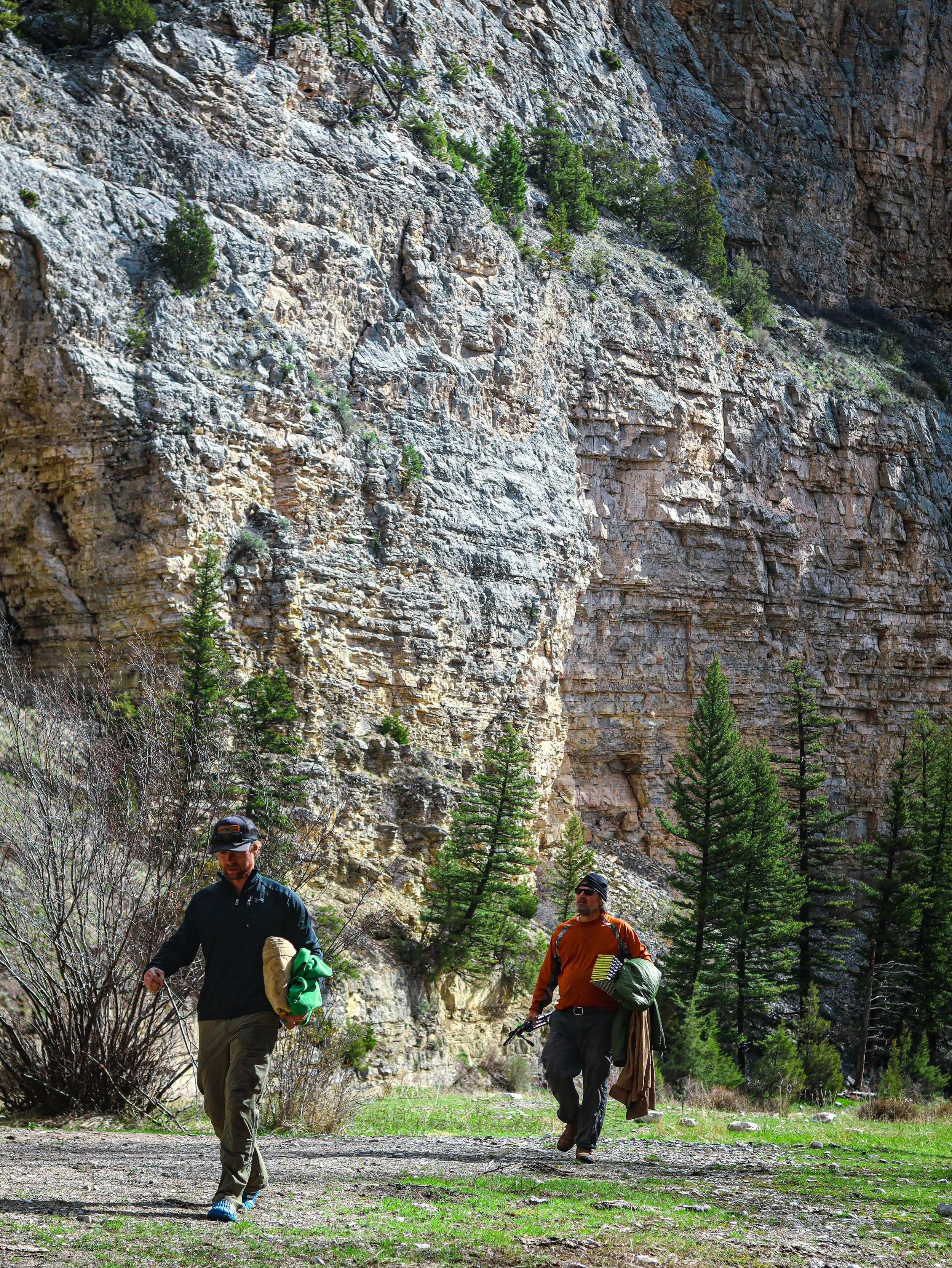
bryon’s first vltat. veterans walking to start morning routine
Bryon Gustafson, MVP's Deputy Director, remembers his first time going through this, on his very first MVP trip:
"We were floating the Smith River, and on the first morning I was honestly a little shocked this was how we were spending our time. There was a great fishing hole right on the shore. We could have been fishing, or starting the day's work clearing timber, but instead we started with this class. After it was over, I understood why. It was almost like I could see colors better, hear my surroundings better, carry a conversation better. It didn't last all day, but it made my morning so much more productive, and I felt better than I had in a long time."
We don't make veterans do anything on a trip with us. Nobody's forced through a breath hold they don't want to try. What we do is encourage people to stay open minded and actually attempt it, because the whole point is giving you something you can take home. Even if the only piece of this morning routine you ever keep is the breathing, that's a real tool, and we've seen it make people's lives better long after the trip ends.
WHY THIS IS THE FIRST THING WE DO
There's a reason this happens before anything else in the day. It's hard, it's a little strange the first time, and it asks something of you before you've even had breakfast. That's exactly the point. If you can sit through a breath hold and feel that fear nerve fire off and not panic, you've already proven something to yourself before the day has really started. Everything else on a VLTAT, the physical work, the miles, the moments that get hard later, gets a little more manageable once you've already done the hardest thing before eight in the morning.